
Quick answer
Mau is a district in Azamgarh Division, Uttar Pradesh, with 9 blocks, 4 tehsils and 675 gram panchayats (LGD code 168). Its population was 22.06 lakh in the 2011 Census, with a literacy rate of 73.1%. The district elects 10 MLAs to the Uttar Pradesh Vidhan Sabha.
About Mau District
Mau (मऊ) district is in the Azamgarh Division of Uttar Pradesh, with its headquarters at Mau. It has 4 tehsils for revenue work and 9 development blocks with 675 gram panchayats between them. LGD code: 168.
Census 2011 counted 22.06 lakh people in the district, spread over 1,713 km² (about 1,288 people per km²). Literacy was 73.1%, and there were 979 women for every 1,000 men.
The district sends 10 MLAs to the Uttar Pradesh Vidhan Sabha (Madhuban, Ghosi, Muhammadabad- Gohna, Mau, Mubarakpur, Barhaj, Chakia, Chillupar and 2 more) and falls in the Ghosi, Azamgarh, Bansgaon and Robertsganj Lok Sabha constituencies.
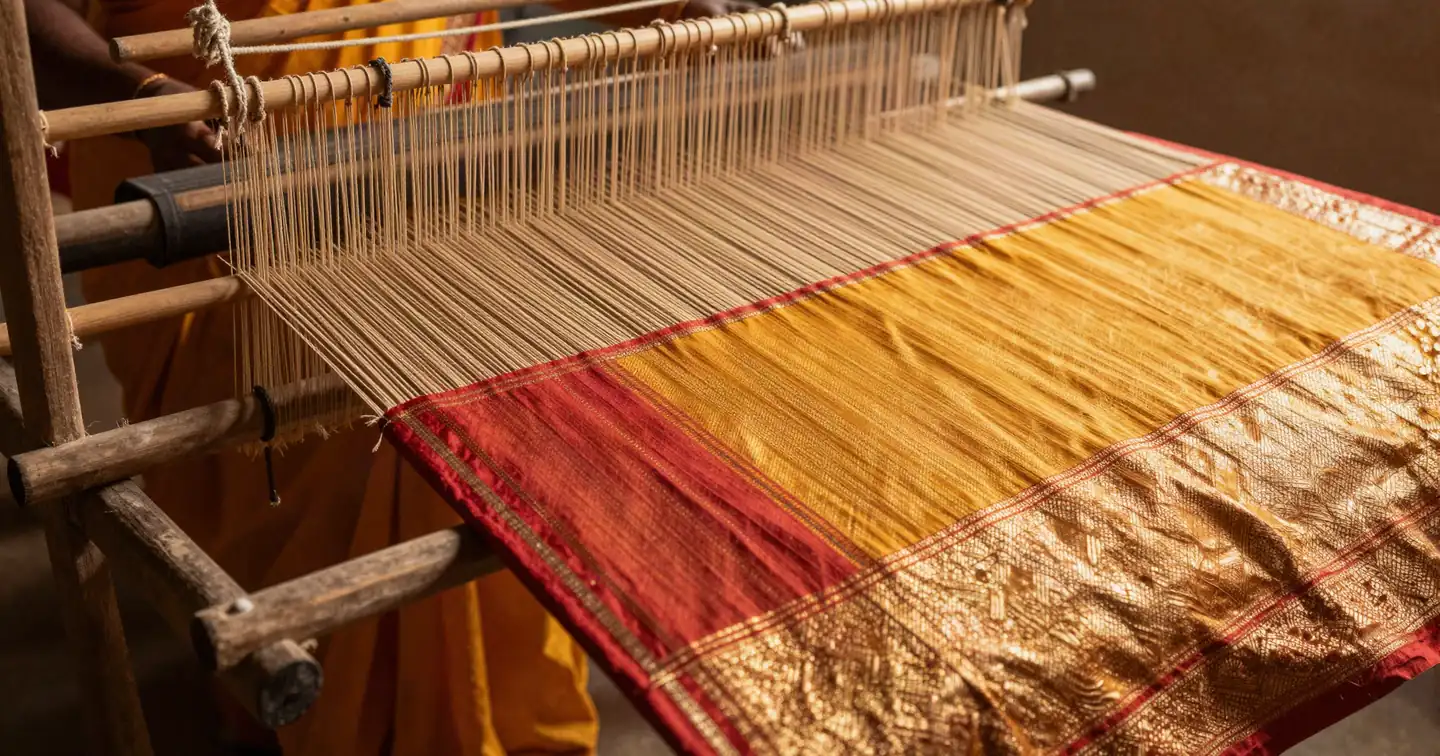
Under One District One Product (ODOP), Mau’s product is Powerloom textiles. Artisans and small units in this trade can get loans, training and help with marketing.
Mau at a glance
| Name | Mau / मऊ |
|---|---|
| Type | District |
| LGD code | 168 |
| Division | Azamgarh Division |
| State | Uttar Pradesh |
| Gram Panchayats | 675 |
| Villages | 1,536 |
| Blocks | 9 |
| Tehsils | 4 |
| Population (2011) | 22,05,968 |
| Households | 3,24,424 |
| Literacy rate | 73.1% |
| Sex ratio | 979 |
| Area | 1,713.0 km² |
| Headquarters | Mau |
| Coordinates | 25.9333° N, 83.5667° E |
| Census 2011 code | 192 |
| Wikidata | Q1518847 |
| Schools | 262 |
| Bank Branches | 68 |
| Post Offices | 156 |
| Polling Centres | 722 |
Map of Mau
Points are approximate, based on State Election Commission polling-centre locations. Map tiles © OpenStreetMap contributors.
Mau District LGD code
| LGD code | |
|---|---|
| Census 2011 code |
The LGD (Local Government Directory) code is a permanent number the Government of India gives every village, panchayat, block and district. eGramSwaraj, nrega.nic.in and many other portals look places up by it, so keep it handy when you fill in an online form.
Mau District Block List
Mau district has 9 development blocks. Each block page lists its gram panchayats, explains what the block office does and sums up local facilities.
| Block | Name in Hindi | Gram Panchayats | Villages | |
|---|---|---|---|---|
| Badraon | बडराव | 72 | 151 | Gram Panchayat list |
| Dohri Ghat | दोहरीघाट | 74 | 164 | Gram Panchayat list |
| Fatehpur Madaun | फतहपुर मण्डाव | 78 | 199 | Gram Panchayat list |
| Ghosi | घोसी | 72 | 165 | Gram Panchayat list |
| Kopaganj | कोपागंज | 81 | 141 | Gram Panchayat list |
| Mohammadabad Gohana | मुहम्मदाबाद | 83 | 190 | Gram Panchayat list |
| Pardaha | परदहा | 51 | 102 | Gram Panchayat list |
| Ranipur | रानीपुर | 87 | 250 | Gram Panchayat list |
| Ratanpura | रतनपुरा | 77 | 174 | Gram Panchayat list |
Mau District Tehsil List
Mau has 4 tehsils. This is where you go for land records, certificates and revenue court cases:
- Ghosi
- Madhuban
- Maunath Bhanjan
- Muhammadabad Gohna (मुहम्मदाबाद)
Population of Mau
- Population
- 22,05,968
- Households
- 3,24,424
- Literacy rate
- 73.1%
- Sex ratio
- 979
At the 2011 Census, Mau had 22,05,968 residents, 11,14,709 male and 10,91,259 female, in 3,24,424 households: about 6.8 people per household. At 73.1%, literacy is higher than the Uttar Pradesh average of 67.7%. Male literacy is 82.5% against 63.6% for women, a gap of 18.8 percentage points.
There are 979 females for every 1,000 males, compared with 912 in Uttar Pradesh. Scheduled Castes make up 21.5% of the population and Scheduled Tribes 1.0%. Children aged 0–6 make up 15.5% of residents.
77.4% of Mau’s people live in villages and 22.6% in towns and cities.
| Rural population | 17,06,760 |
|---|---|
| Rural households | 2,53,645 |
| Rural literacy rate | 71.8% |
| Rural sex ratio | 987 |
| Rural SC population share | 24.8% |
| Rural work participation | 31.2% |
Health and household indicators (NFHS-5)
Key figures for Mau district from the National Family Health Survey (NFHS-5, 2019–21):
| Indicator | Mau |
|---|---|
| Women who are literate | 72.0% |
| Women with 10+ years of schooling | 53.1% |
| Institutional births | 94.7% |
| Children 12–23 months fully vaccinated | 59.1% |
| Children under 5 who are stunted | 25.4% |
| Women (15–49) who are anaemic | 44.3% |
| Households using clean cooking fuel | 54.2% |
| Households with improved sanitation | 75.1% |
| Households with electricity | 94.2% |
| Households with health insurance | 16.0% |
| Households with improved drinking water | 99.8% |
Work and livelihood
At Census 2011, 31.6% of people in Mau were workers. Of them, 20.8% farmed their own land, 30.5% were farm labourers, 17.0% worked in household industries and 31.7% in other jobs such as services, trade and construction.
Administration
The District Magistrate (DM) heads the administration of Mau district. The Chief Development Officer (CDO) oversees rural development schemes, the District Panchayat Raj Officer (DPRO) looks after all gram panchayats, and the Superintendent of Police (SP) handles law and order. The elected Zila Panchayat, headed by the Zila Panchayat Adhyaksh, is the top tier of Panchayati Raj.
Mau MLA and MP List

MP, Ghosi
| Party | Samajwadi Party |
|---|---|
| Term / election | 2024 Lok Sabha election |
| Votes received | 5,03,131 |
| Vote share | 43.7% |
| Winning margin | 1,62,943 |
| Runner-up | Dr. Arvind Rajbhar |
Source: Election Commission of India, Lok Sabha 2024 results, 2024-06-04
MP, Azamgarh
| Party | Samajwadi Party |
|---|---|
| Term / election | 2024 Lok Sabha election |
| Votes received | 5,08,239 |
| Vote share | 48.2% |
| Winning margin | 1,61,035 |
| Runner-up | Dinesh Lal Yadav Ânirahuaâ |
Source: Election Commission of India, Lok Sabha 2024 results, 2024-06-04
MP, Bansgaon
| Party | Bharatiya Janata Party |
|---|---|
| Term / election | 2024 Lok Sabha election |
| Votes received | 4,28,693 |
| Vote share | 45.4% |
| Winning margin | 3,150 |
| Runner-up | Sadal Prasad |
Source: Election Commission of India, Lok Sabha 2024 results, 2024-06-04

MP, Robertsganj
| Party | Samajwadi Party |
|---|---|
| Term / election | 2024 Lok Sabha election |
| Votes received | 4,65,848 |
| Vote share | 46.1% |
| Winning margin | 1,29,234 |
| Runner-up | Rinki Singh |
Source: Election Commission of India, Lok Sabha 2024 results, 2024-06-04
Women's representation in Mau
Under Article 243D of the Constitution, at least one-third of panchayat seats, including the post of Pradhan, are reserved for women, and the reserved seats rotate from one election to the next.
- Panchayats headed by a woman
- 33.2%2026-10CalculatedUP Panchayati Raj Department
- Women among ward members
- 39%2026-10CalculatedUP Panchayati Raj Department
224 of the 675 gram panchayats in Mau have a woman Pradhan (33%), slightly behind the Uttar Pradesh share of 35%. 2026-10CalculatedUP Panchayati Raj Department
Women make up 39.4% of the 8,437 ward members across Mau's gram panchayats, about the same as the Uttar Pradesh share of 40.1%. Going by the education recorded for each Pradhan, 62% of the panchayat heads in Mau studied to class 9 or beyond and 30% are graduates.
Vidhan Sabha and Lok Sabha seats in Mau
Seats held by each party in the 10 assembly constituencies of Mau: Bharatiya Janata Party 4, Samajwadi Party 4, Suheldev Bharatiya Samaj Party 1, Bahujan Samaj Party 1.
Panchayat elections
- Pradhan seats won by women
- 44%2015CalculatedUP panchayat election results (in-rolls)
Women won 301 of the 684 Pradhan seats in Mau in the 2015 panchayat election (44%), 74 of them on seats not reserved for women; in 2010 the share was 37%. 2015CalculatedUP panchayat election results (in-rolls)
In 2015, 1 of the 684 Pradhans in Mau was elected unopposed.
How Mau scores on the Panchayat Advancement Index
The Ministry of Panchayati Raj's Panchayat Advancement Index (PAI 2.0) gives every gram panchayat a score from 0 to 100 on nine themes of the Localised Sustainable Development Goals. It uses about 150 indicators that panchayats report and block and district officials check.
- PAI score
- 54.8/1002023-24CalculatedPanchayat Advancement Index (PAI 2.0)
Across its panchayats, Mau averages 54.8 out of 100 in the Panchayat Advancement Index 2023-24, 47th of 75 in Uttar Pradesh, about the same as the Uttar Pradesh average of 54.8. 2023-24CalculatedPanchayat Advancement Index (PAI 2.0)
2 of the 645 scored panchayats in Mau (0.3%) reached 75 or more, the Front Runner band or above, placing it 7th of 75 districts in Uttar Pradesh (the Uttar Pradesh share is 0.1%).
Scores on the nine development themes
Mau does best on “Socially just and secured” (68.1) and worst on “Women-friendly panchayat” (42.7). That 25-point gap shows where the next Gram Panchayat Development Plan could focus. 2023-24CalculatedPanchayat Advancement Index (PAI 2.0)
Awards and recognition
2 gram panchayats of Mau district won National Panchayat Awards between 2018 and 2025, including Mahpur, Samharua. 2025ListedNational Panchayat Awards
Schools in and near Mau
Mau District has 262 government school buildings on record. See the full list of schools
We built this list from State Election Commission polling centres in government school buildings, so it mostly shows Basic Shiksha Parishad primary, upper-primary and composite schools. For the full register, including private schools and inter colleges, see UDISE+ (udiseplus.gov.in).
Banks (IFSC), post office (PIN) and CSC near Mau
On record in Mau District: 68 Bank Branches and 156 Post Offices.
Banks with the most branches here: Union Bank of India, State Bank of India, Bank of Baroda.
Facilities at a glance
How to reach Mau
The nearest railway station to the centre of Mau is Mau Jn, about 0.7 km away.
The nearest airport is Lal Bahadur Shastri International Airport, about 89 km away.
| Place | Type | Distance | Direction |
|---|---|---|---|
| Mau Jn (MAU) | Railway Station | 0.7 km | north |
| Paniara (PNRA) | Railway Station | 5.4 km | south-west |
| Paligarh (PLGH) | Railway Station | 6.8 km | north-west |
| Lal Bahadur Shastri International Airport | Airport | 89 km | south-west |
| Gorakhpur Airport | Airport | 90 km | north |
Distances are straight-line; by road it's usually 20–40% farther.
How far Mau is from everyday services
Straight-line distances from the panchayat's mapped centre to the nearest facility of each kind. By road, expect them to be 20–40% longer.
- Nearest bank branch
- 7.2 kmCalculatedRBI bank branch list
- Nearest railway station
- 9.2 kmCalculatedDataMeet railways
On average, a gram panchayat in Mau is 7.2 km from the nearest bank branch (about the same as the Uttar Pradesh average of 7.3 km). CalculatedRBI bank branch list
A typical gram panchayat in Mau is 9.2 km from the nearest railway station. Gram panchayats in Mau are, on average, 3.6 km from the nearest post office.
Places near Mau
The Districts closest to Mau, by straight-line distance between their approximate centres:
| District | Division | Distance | Direction |
|---|---|---|---|
| Ghazipur | Varanasi Division | 39 km | south |
| Azamgarh | Azamgarh Division | 41 km | west |
| Ballia | Azamgarh Division | 63 km | east |
| Deoria | Gorakhpur Division | 68 km | north |
| Chandauli | Varanasi Division | 81 km | south |
| Jaunpur | Varanasi Division | 84 km | west |
Other Districts in Azamgarh Division
Citizen services: how to get things done
Income, caste and domicile certificates
- Apply at a Jan Seva Kendra (CSC) or on e-District UP (edistrict.up.gov.in). Take your Aadhaar, a photo and a signed self-declaration.
- The application goes to your Tehsil. The Lekhpal checks it in the village and the Revenue Inspector (Kanungo) sends the report on.
- The Tehsildar / SDM issues a digitally signed certificate, usually within 7–15 working days. Track it online with your application number.
Khatauni (land record) and Dakhil-Kharij (mutation)
- On UP Bhulekh (upbhulekh.gov.in), choose district Mau, your tehsil and your village, then search by account number, plot (khasra) number or name to see the Khatauni.
- You can get a certified copy at a Jan Seva Kendra (CSC) or the Tehsil office. Check the status of a Dakhil-Kharij (mutation) case on Revenue court case status (Vaad) (vaad.up.nic.in).
Ration card
- To get a new ration card or add family members, apply on Food and Civil Supplies, UP (fcs.up.gov.in) or through a Jan Seva Kendra (CSC). The card is made out in the name of the eldest woman of the household.
- In villages, the block office officials check the application and the supply inspector or District Supply Officer approves it.
Old-age, widow and disability pension
- Apply online on Social pension portal (SSPY) (sspy-up.gov.in) or through a Jan Seva Kendra (CSC). Attach proof of age (or of your spouse’s death, or of disability), an income certificate, Aadhaar and your bank passbook.
- In villages, the Block Development Officer (BDO) verifies the application. Once it’s sanctioned, the pension goes straight into your bank account.
Complaints and Right to Information (RTI)
- Complain about any government service on IGRS (Jansunwai) (jansunwai.up.nic.in) or call 1076. It goes to the officer responsible, and you can track what happens online.
- To find out what the panchayat spent and on which works, file an RTI application (₹10 fee) with the Public Information Officer at the block office. Works and payments are also listed on egramswaraj.gov.in.
Portals and procedures change, so check with the office before you apply. If a link has moved, look for the service by name on the portal's home page.
Government schemes for residents of Mau
Households in Mau can apply for the schemes below, covering housing, work, farming, pensions, health, education and support for women. Each one shows the local office where you apply.
Pradhan Mantri Awas Yojana – Gramin (PMAY-G)
Financial help to build a pucca house with basic amenities for rural families who are homeless or live in kutcha houses.
| Benefit | ₹1.20 lakh in plain areas (plus rural job scheme wages (VB-G RAM G, earlier MGNREGA) and a Swachh Bharat toilet) |
|---|---|
| Who can apply | Houseless or kutcha-house families identified through SECC/Awaas+ survey and approved by the Gram Sabha |
| Where to apply | the panchayat secretary and the block office |
Viksit Bharat Guarantee for Rozgar and Ajeevika Mission (Gramin), VB-G RAM G (earlier MGNREGA)
From 1 July 2026 this Act replaces MGNREGA. Every rural household can get at least 125 days of paid unskilled work a year on works the Gram Sabha approves, such as ponds, roads, plantations and farm bunds. Old e-KYC'd MGNREGA job cards stay valid until the new Gramin Rozgar Guarantee Cards are issued.
| Benefit | At least 125 days of work a year at the notified wage, paid weekly or within 15 days into your bank or post office account |
|---|---|
| Who can apply | Any adult member of a rural household willing to do unskilled manual work |
| Where to apply | the panchayat secretary and the block office |
PM Kisan Samman Nidhi (PM-KISAN)
Income support of ₹6,000 a year, paid in three instalments of ₹2,000 directly to the bank accounts of land-holding farmer families.
| Benefit | ₹6,000 per year in three instalments |
|---|---|
| Who can apply | Farmer families owning cultivable land (with exclusions for taxpayers, pensioners and officials); e-KYC and land seeding required |
| Where to apply | the nearest Common Service Centre (CSC), online and the block office |
Ayushman Bharat – PM Jan Arogya Yojana (Ayushman card)
Cashless hospital treatment up to ₹5 lakh per family per year at empanelled government and private hospitals; all citizens aged 70+ are also covered.
| Benefit | Health cover of ₹5 lakh per family per year |
|---|---|
| Who can apply | SECC-listed deprived families, NFSA ration-card families covered by the UP extension, and senior citizens 70+ |
| Where to apply | the nearest Common Service Centre (CSC) and online |
Free ration under NFSA / PM Garib Kalyan Anna Yojana
Free foodgrains every month through fair price shops: 5 kg per person for priority households and 35 kg per family for Antyodaya cards.
| Benefit | Free wheat/rice every month |
|---|---|
| Who can apply | Households holding a Priority Household (PHH) or Antyodaya (AAY) ration card |
| Where to apply | the nearest Common Service Centre (CSC) and the block office |
Old Age Pension (Vridhavastha Pension), Uttar Pradesh
Monthly pension for elderly people from low-income families, paid quarterly into their bank account.
| Benefit | ₹1,000 per month |
|---|---|
| Who can apply | Age 60+ and family income within the notified rural limit |
| Where to apply | online, the nearest Common Service Centre (CSC) and the block office |
Destitute Women (Widow) Pension, Uttar Pradesh
Monthly pension for widowed women aged 18 or above from low-income families.
| Benefit | ₹1,000 per month |
|---|---|
| Who can apply | Widowed women 18+ within the notified income limit |
| Where to apply | online and the nearest Common Service Centre (CSC) |
Divyang (Disability) Pension, Uttar Pradesh
Monthly maintenance grant for persons with 40% or more disability from low-income families.
| Benefit | ₹1,000 per month |
|---|---|
| Who can apply | Disability of 40%+ (medical certificate / UDID) within the income limit |
| Where to apply | online and the nearest Common Service Centre (CSC) |
Swachh Bharat Mission – Gramin (household toilet)
Incentive to build an individual household toilet, plus solid and liquid waste management works in villages under ODF Plus.
| Benefit | ₹12,000 incentive for a household toilet |
|---|---|
| Who can apply | Rural households without a toilet (BPL and identified APL categories) |
| Where to apply | the panchayat secretary, the block office and online |
Jal Jeevan Mission – Har Ghar Jal
Functional household tap connection providing safe drinking water to every rural home, managed with the village water and sanitation committee.
| Benefit | Free household tap connection |
|---|---|
| Who can apply | All rural households |
| Where to apply | the panchayat secretary |
Pradhan Mantri Ujjwala Yojana (free LPG connection)
Deposit-free LPG connection with first refill and stove for women from poor households.
| Benefit | Free LPG connection, first refill and stove |
|---|---|
| Who can apply | Adult women from poor households without an existing LPG connection |
| Where to apply | online and the nearest Common Service Centre (CSC) |
Mukhyamantri Kanya Sumangala Yojana
Staged cash support for girls from birth to graduation, paid in six instalments to encourage health and education of the girl child.
| Benefit | Up to ₹25,000 in six instalments |
|---|---|
| Who can apply | Girls of UP families with annual income up to ₹3 lakh (max. two daughters per family) |
| Where to apply | online and the nearest Common Service Centre (CSC) |
Pradhan Mantri Matru Vandana Yojana (PMMVY)
Maternity benefit for pregnant and lactating mothers to compensate wage loss and support nutrition.
| Benefit | ₹5,000 for the first child; ₹6,000 if the second child is a girl |
|---|---|
| Who can apply | Pregnant women and lactating mothers (excluding regular government employees) |
| Where to apply | the Anganwadi centre and online |
Pradhan Mantri Jan Dhan Yojana (zero-balance account)
Basic savings bank account with no minimum balance, RuPay debit card with accident insurance and overdraft facility.
| Benefit | Zero-balance account, RuPay card, ₹2 lakh accident cover |
|---|---|
| Who can apply | Any Indian resident aged 10+ without a bank account |
| Where to apply | your bank branch |
Kisan Credit Card (KCC)
Short-term crop loans at a subsidised interest rate for farmers, livestock and fisheries, with interest subvention for prompt repayment.
| Benefit | Crop loan at an effective 4% interest on timely repayment (up to ₹3 lakh) |
|---|---|
| Who can apply | Owner and tenant farmers, sharecroppers, SHGs/JLGs of farmers, animal husbandry and fisheries farmers |
| Where to apply | your bank branch |
Janani Suraksha Yojana (JSY)
Cash assistance for institutional delivery in government hospitals, with free transport and care arranged through the ASHA.
| Benefit | ₹1,400 to rural mothers for institutional delivery |
|---|---|
| Who can apply | Pregnant women delivering in a government or accredited facility |
| Where to apply | the Anganwadi centre |
Mukhyamantri Samuhik Vivah Yojana
Financial assistance and gifts for marriages of daughters from poor families solemnised at mass-marriage events organised by the block or district.
| Benefit | Assistance deposited in the bride's account plus gifts and event costs |
|---|---|
| Who can apply | Daughters (18+) of families within the income limit; groom 21+ |
| Where to apply | online and the block office |
Pradhan Mantri Fasal Bima Yojana (crop insurance)
Crop insurance against natural calamities, pests and diseases at a low farmer premium (2% Kharif, 1.5% Rabi).
| Benefit | Compensation for notified crop losses |
|---|---|
| Who can apply | All farmers growing notified crops in notified areas |
| Where to apply | your bank branch, the nearest Common Service Centre (CSC) and online |
PM Jeevan Jyoti Bima & PM Suraksha Bima Yojana
Low-cost life cover (₹2 lakh for ₹436 a year) and accident cover (₹2 lakh for ₹20 a year) through your bank account.
| Benefit | ₹2 lakh life cover and ₹2 lakh accident cover |
|---|---|
| Who can apply | Bank account holders aged 18–50 (life) and 18–70 (accident) |
| Where to apply | your bank branch |
DAY-NRLM / UP State Rural Livelihood Mission (women's self-help groups)
Organises rural women into self-help groups with revolving funds, bank credit and livelihood training; members can become BC Sakhi, Lakhpati Didi and more.
| Benefit | Revolving fund, community investment fund and low-interest bank loans |
|---|---|
| Who can apply | Women from rural households, especially poor and vulnerable families |
| Where to apply | the block office |
PM Vishwakarma Yojana
Recognition, skill training, toolkit incentive and collateral-free credit for traditional artisans and craftspeople in 18 trades.
| Benefit | ₹15,000 toolkit incentive and loans up to ₹3 lakh at 5% |
|---|---|
| Who can apply | Artisans aged 18+ working in the listed trades (one member per family) |
| Where to apply | the nearest Common Service Centre (CSC) |
UP Pre-Matric & Post-Matric Scholarship
Scholarship and fee reimbursement for SC, ST, OBC, minority and general-category students from low-income families in classes 9 and above.
| Benefit | Scholarship plus fee reimbursement, paid by DBT |
|---|---|
| Who can apply | UP domicile students within category-wise income limits |
| Where to apply | online |
Atal Pension Yojana
Guaranteed monthly pension of ₹1,000 to ₹5,000 after age 60 for unorganised-sector workers who contribute through their bank account.
| Benefit | ₹1,000–₹5,000 monthly pension after 60 |
|---|---|
| Who can apply | Bank account holders aged 18–40 who are not income-tax payers |
| Where to apply | your bank branch |
PM Surya Ghar Muft Bijli Yojana (rooftop solar)
Subsidy for installing rooftop solar panels on homes, providing up to 300 units of free electricity a month.
| Benefit | Subsidy up to ₹78,000 for rooftop solar |
|---|---|
| Who can apply | Households with their own roof and a valid electricity connection |
| Where to apply | online |
Terrain and climate of Mau
- Elevation
- 76 mCalculatedSRTM elevation model
- Average annual rainfall
- 1,014 mm2001-2020CalculatedNASA POWER
The gram panchayats of Mau lie at an average of about 76 metres above sea level. CalculatedSRTM elevation model
Mau gets roughly 1,000 mm of rain in an average year. The land around it is almost flat: heights within 2 km vary by only about 12 m, typical of the alluvial plains.
Land cover around Mau
Land cover within about 2 km
- Cropland 82%
- Tree cover 9.4%
- Built-up land 5.1%
- Water and wetland 1.4%
- Grass and scrub 1.5%
- Bare or sparse land 0.3%
Averaged over its gram panchayats, the land around Mau's villages is about 82% cropland, 9% tree cover and 5% built-up (ESA WorldCover 2021). 2021CalculatedESA WorldCover 2021
From the blog
Stories from Mau District
UP Panchayat Chunav 2026: What We Know About the Gram Pradhan Election Date
The Pradhans elected in 2021 finished their five-year term in May 2026. Here is what is confirmed about the next election and what you can do now.
Mau District: frequently asked questions
Which division is Mau District in?
Mau District is part of Azamgarh Division.
What is the headquarters of Mau District?
The headquarters of Mau District is Mau.
What is the population of Mau District?
The 2011 Census counted 22,05,968 people in Mau District, living in 3,24,424 households. About 77% of them lived in villages.
How many gram panchayats are there in Mau District?
There are 675 gram panchayats in Mau District.
How many villages are there in Mau District?
Mau District has 1,536 revenue villages.
How many blocks are there in Mau District?
Mau District has 9 development blocks.
How many tehsils are there in Mau District?
Mau District has 4 tehsils.
How many assembly seats are there in Mau District?
Mau District has 4 assembly constituencies: Madhuban, Ghosi, Muhammadabad- Gohna and Mau.
Show 20 more questions
Who are the MLAs of Mau District?
The MLAs for Mau District (2022 election) are Madhuban: Ram Bilash Chauhan (Bharatiya Janata Party); Ghosi: Dara Singh Chauhan (Samajwadi Party); Muhammadabad- Gohna: Rajendra Kumar (Samajwadi Party); Mau: Abbas Ansari (Suheldev Bharatiya Samaj Party).
Which Lok Sabha constituency is Mau in?
Mau is in the Ghosi Lok Sabha constituency.
Who is the MP of Mau?
The Member of Parliament for Ghosi is Rajeev Rai (Samajwadi Party), elected in the 2024 Lok Sabha election. They got 5,03,131 votes (43.7%) and won by 1,62,943 votes.
What is the ODOP product of Mau District?
Under One District One Product (ODOP), Mau District is known for Powerloom textiles.
What is the literacy rate of Mau District?
The literacy rate of Mau District was 73.1% in the 2011 Census (men 82.5%, women 63.6%), against the state average of 67.7%.
What is the sex ratio of Mau District?
In the 2011 Census, Mau District had 979 females for every 1,000 males (state average 912).
What is the area of Mau District?
Mau District covers about 1,713 sq km, which works out to about 1,288 people per sq km on its 2011 population.
Which block of Mau District has the most gram panchayats?
Ranipur block has the most gram panchayats (87).
How many Gram Pradhans in Mau District are women?
Women hold the Gram Pradhan post in 224 of the 675 gram panchayats of Mau District (33%), according to the UP Panchayati Raj Department list of October 2026. In the 2015 panchayat election, women won 301 of the 684 Gram Pradhan seats here (44%).
How many ward members are there in Mau District?
The gram panchayats of Mau District have 8,437 ward members in all, 3,321 of them women (39%), according to the UP Panchayati Raj Department list of October 2026.
How do the panchayats of Mau perform in the Panchayat Advancement Index?
The gram panchayats of Mau average 54.8 out of 100 in PAI 2023-24, about the same as the Uttar Pradesh average of 54.8.
Which panchayats in Mau District have won National Panchayat Awards?
2 gram panchayats in Mau District have won National Panchayat Awards from the Ministry of Panchayati Raj (up to 2025): Mahpur, Samharua.
How many banks and post offices are there in Mau District?
We list 68 bank branches and 156 post offices in Mau District.
How many polling centres are there in Mau District?
The State Election Commission lists 722 polling centres in Mau District, and 262 government school buildings are on record.
Which is the nearest airport to Mau District?
The nearest airport to the centre of Mau District is Lal Bahadur Shastri International Airport (VNS), about 89 km away as the crow flies. The next nearest is Gorakhpur Airport (GOP), about 90 km away.
How can I file a complaint with the Mau District administration?
File your complaint on IGRS (Jansunwai) (jansunwai.up.nic.in) or call helpline 1076. It goes to the District Magistrate (DM) of Mau District and the department concerned, and you can track it online with the complaint number. On Tehsil Diwas (first and third Tuesday of the month), you can also meet the officers in person at your tehsil.
Which districts are near Mau District?
What is the altitude of Mau District above sea level?
The gram panchayats of Mau District lie at an average of about 76 metres above sea level (SRTM terrain model).
How much rainfall does Mau District get, and how hot does it get?
On 2001-2020 averages, the gram panchayats of Mau District get about 1,010 mm of rain a year, 86% of it between June and September. The hottest days reach about 48°C, while the coldest nights fall to about 1°C. (NASA POWER satellite-model estimates)
How much farmland and tree cover is there around Mau District?
Around the gram panchayats of Mau District, the land is on average 82% cropland, 9% tree cover, 5% built-up land and 1% water, going by ESA WorldCover 2021 satellite maps.
Data sources and updates
We built this page from public, open government data. Each figure is as of its source’s date and may have changed since, so check with the office concerned before using it for anything official.
- Assembly constituency boundaries (post-2008 delimitation), datameet/maps, CC BY 2.5 IN
- Airports (OurAirports), Public domain
- Aspirational Districts and Aspirational Blocks Programmes, Public government data
- NASA POWER agro-climatology (long-term monthly normals), Public domain (NASA) (as of 2026-10-14)
- Zoloth curated tables (divisions, ODOP, schemes), CC BY 4.0
- Calculated by Zoloth from the sources cited alongside, CC BY 4.0
- DIGIPIN national addressing grid, computed from the panchayat's reference point, Open algorithm
- SRTM 1-arc-second elevation (AWS Terrain Tiles, Skadi), Public domain (SRTM); see terrain-tiles attribution (as of 2026-10-14)
- Bank branches with IFSC/MICR (razorpay/ifsc-api), MIT (public RBI data)
- UP gram pradhan election results 2005–2021 (in-rolls/local_elections_up), MIT (compilation); public election results (as of 2026-10-14)
- ESA WorldCover 10 m land cover 2021 (v200), CC BY 4.0 (as of 2026-10-14)
- Local Government Directory snapshot (planemad/india-local-government-directory), GODL-India (as of 2022-03-11)
- Lok Sabha 2024 constituency results, Public results (as of 2024)
- Government schemes (myScheme.gov.in), Public scheme information (dataset Apache-2.0)
- National Family Health Survey 5 district fact sheets, Public fact sheets (as of 2019-21)
- Panchayat Advancement Index, theme-wise gram panchayat scores, Public government data (as of 2026-10-14)
- Census of India 2011 Primary Census Abstract (district), Public (as of 2011)
- All-India post office and PIN directory with coordinates, GODL-India
- National Panchayat Awards winners, Public government data (as of 2026-10-14)
- Railway stations (datameet/railways), CC0
- UP SEC panchayat polling centres (in-rolls/up_polling_station_locations), Public government data; compilation by in-rolls
- Gram panchayat office-bearers report (PB-2 form), Public government report (as of 2026-10-14)
- UP Vidhan Sabha 2022 and Lok Sabha 2024 segment results, Public results (as of 2022)
- Wikidata, CC0
Data last refreshed: October 18, 2026
How we collect and label data · Disclaimer